
















KYOTO, Japan- Known as the “way of the gods,” Shintoism is the oldest and native religion of Japan.
In Japan, 88.9 million people followed Shintoism in 2020, according to the U.S. Department of State.
Unlike religions like Christianity, Islam or Judaism, Shinto does not prescribe a specific doctrine or religious text. Instead, Shintoism follows a living tradition rooted within Japanese culture and history.
Built on customs
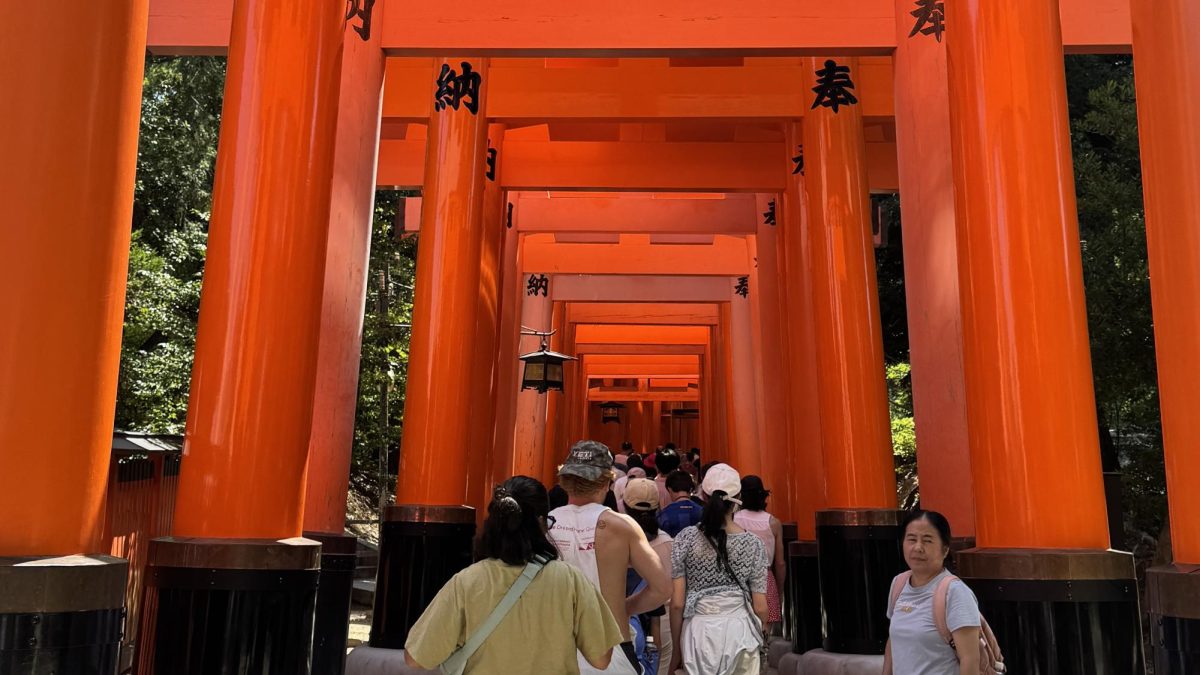
Shinto followers typically do not identify as religious in the sense that we do in the United States. Instead, Shinto followers observe customs during big life events, seasonal festivals and periodic visits to shrines. During these times Shinto followers indulge in practices such as purification rituals before entering shrines, giving an offering to Kami (divine spirits or deities) by using yen coins and then praying for good fortune, health—or anything, really.
There are more than 80,000 Shinto shrines across Japan. Some shrines people visit for specific reasons. Some shrines, such as the Meiji Jingu Shrine, are places for followers to connect with previous rulers or spirits to look for guidance in their everyday lives. Other shrines, like the Okumiya Shrine, which sits on top of Mount Fuji, is the resting place of the volcano goddess, reflecting the history of Fuji’s status as an active volcano.
Floating torii gate
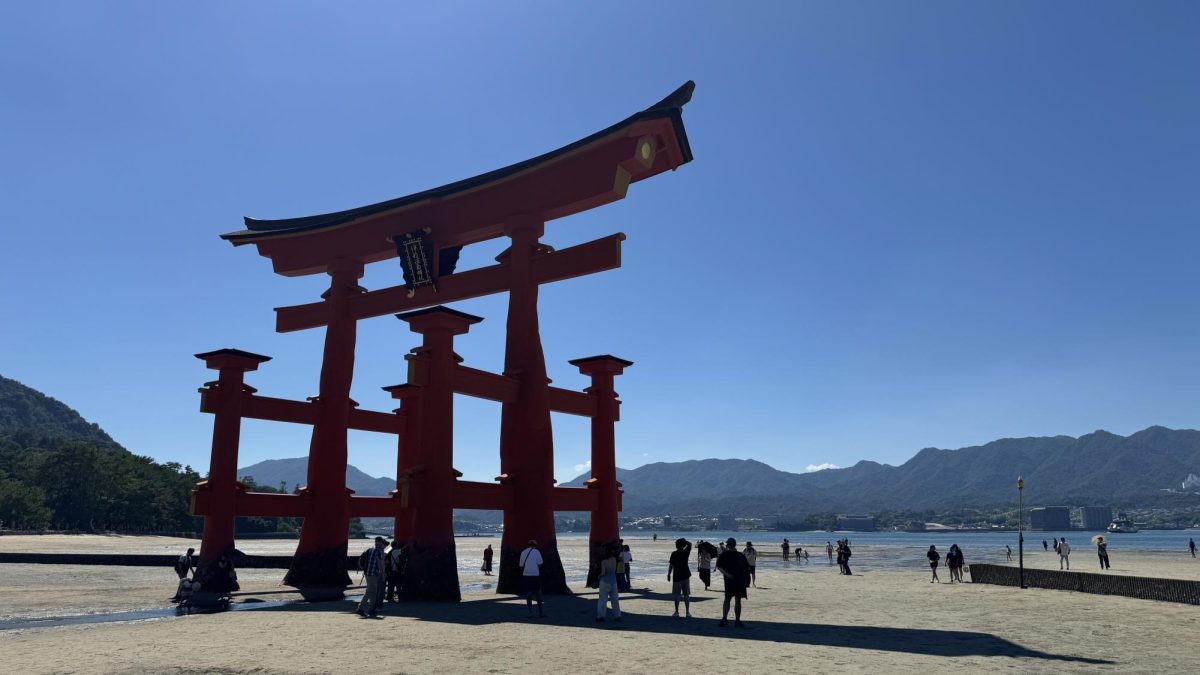
Miyajima is an island in Japan that is rooted in Shinto beliefs. The entire island is believed to be a god and has been worshiped by followers since ancient times. Known for its iconic “floating” torii gate, Miyajima is an UNESCO World Heritage Site due to the practices taking place on the island for centuries.
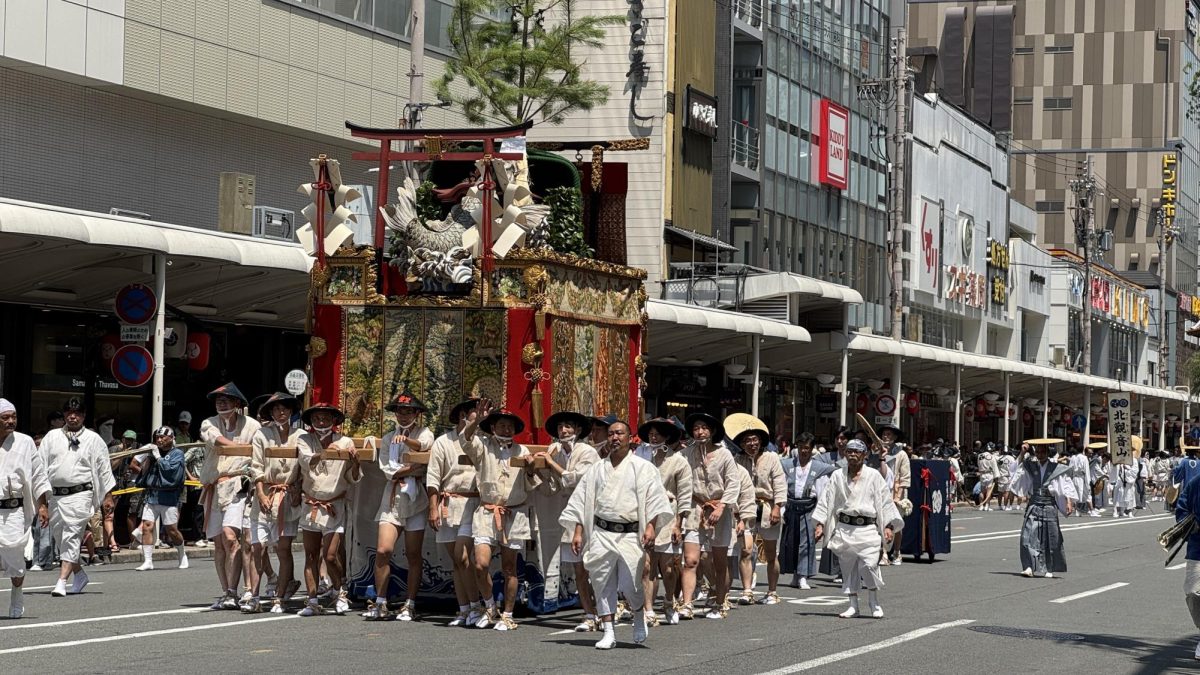
Other than shrines, festivals also play a major role in Shinto history. The Gion Matsuri is the most famous festival in Japan and takes place in Kyoto during July. The festival started as a purification ritual. The ritual was for a plague that struck in 869 AD. The festival was started to please the gods to purify those affected by the plague and protect those who celebrated from illness.
During the festival, floats called Yamahoko, which are accompanied by musicians and geisha women, are pulled through the street by teams of people.
I attended the Gion Matsuri during one of the main parade days, and the scale of the entire festival was unlike anything I have ever seen before. Even two hours before the parade, crowds were already forming along the street where the floats were going to be. Parade-goers held umbrellas against the sun with fans in hand trying to cool off from the humid summer heat as they sought to find a spot that was just right to experience the festivities. The energy and anticipation of the spectators ran rampant before the first float appeared.
Sights and sounds of Gion Matsuri
Ding! Ding! Ding!
Then we heard it, the sound of bells chiming from the street. Children in a line chante as they marched through the city.
The floats were enormous, rising above the crowds like moving towers. Covered in red with a gold accent, the floats carried men playing the drums, flutes and even bells. Even though they were all a part of the same festival, each float represented something and was distinct in its own unique way. The floats were pulled by dozens of men with ropes and guided by chants. You could hear the creaking of the wooden wheels as they passed.
Despite the number of people engrossed in the festival, it never felt chaotic. It all seemed carefully planned out, and to someone like me who is a foreigner, it was mesmerizing. It really felt as if I participated in what was once a ritual for the sick and is today a vibrant, colorful and beautiful festival today.
That day, I understood how deeply Shinto lives in the heart of Japanese life. Shintoism is not confined to shrines or practices, but it is rooted in the heart of Japanese culture itself.