











ARLINGTON, Texas—In place of long checkout lines and big box garden centers, visitors to one Arlington neighborhood are finding something more personal.
Tucked behind a home at 1305 W. Second St., just outside the University of Texas at Arlington, rows of plants, greenhouse tunnels and friendly conversation create an experience that feels less like shopping and more like community.
From home garden to nursery
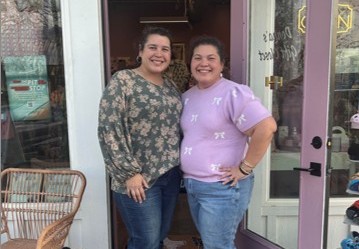
Happy Monkey Farms, a backyard nursery owned by John McGee and his husband, Eric Uzelac, has grown from a small experiment into a seasonal destination for plant lovers across North Texas.
What began as a simple attempt at gardening quickly turned into something more.
“If you’ve ever bought a seed packet from the grocery store, it comes with 200 seeds,” McGee said. “But who needs 200 broccolis, right?”
After planting an entire packet, McGee found himself with more plants than he could manage. Rather than letting them go to waste, Uzelac listed them online for $1 each. The response was immediate.
“Within a few days we had sold them all,” McGee said. “So that was kind of the beginning.”
Expansion includes multiple greenhouses
Over time, the backyard operation expanded. What started in a small space now includes multiple greenhouses and a steady stream of returning customers. The farm opens to the public for a few weekends each year, with additional appointments available throughout the spring.
Despite its growth, McGee said the focus has never shifted toward profit.
“Less than a business, it really is more of a passion of ours,” he said. “There’s something about the plant community—nobody is in a bad mood when they’re buying plants.”
That atmosphere has become a defining feature of the farm. Customers from diverse backgrounds gather in the space, often forming connections over a shared interest.
“I think we live in this increasingly polarized society,” McGee said. “And I see people of all walks of life coming together and laughing and smiling over plants.”
At Happy Monkey Farms, he said those differences seem to fade.
“When you’re at the plant farm, religion and politics and all these things—that kind of all melts away,” McGee said.
Meaningful work
For Uzelac, that sense of positivity is what makes the work meaningful. But his path to the farm was shaped by a major life challenge.
After developing pneumonia, Uzelac was placed in a medically induced coma when his brain was not receiving enough oxygen. When he recovered, much of his previous work had disappeared.
“I really don’t have a business anymore because I was asleep for so long,” Uzelac said. “Things kind of just naturally dismantled themselves.”
Recovery required him to rebuild from the ground up, both physically and professionally.
“I was learning to walk and everything again,” he said.
That experience led him to reevaluate his priorities and focus on what brought him happiness.
“I just kind of started going down a path of things that make me feel good,” Uzelac said. “And that was plants and junk.”
Now, years later, that path defines his daily life.
“Seven years later, that’s pretty much all I do all day every day,” he said.
McGee’s journey also requires balance and persistence. Alongside running the farm, he is pursuing a master’s degree in conservation biology at Cornell University.
“It’s a double-edged sword,” McGee said. “It’s hard for me to step away from that because it really does bring me a lot of joy.”
While Uzelac manages day-to-day operations, McGee handles the farm’s digital presence, including its website, emails and customer communication, all while completing graduate coursework.
Weather presents biggest challenge
Running a nursery comes with its own challenges. Both owners said the biggest obstacle is the weather, which can quickly impact inventory and sales.
“The weather is honestly my biggest challenge because I can’t control it,” Uzelac said.
Sudden cold snaps, intense winds and extreme heat can damage plants, forcing the owners to constantly adapt.

Even so, the rewards outweigh the difficulties.
“You’re going to be on your feet for 14 hours a day,” McGee said. “It’s physically demanding, but it’s so worth it.”
Over time, the farm has become more than just a place to buy plants. Visitors have asked to use the space for personal milestones, including dates, weddings, and funerals.
“I was moved by it,” McGee said of one family that held a cultural memorial at the farm. “I love that they felt so connected to the property.”
A focus on sustainability
Beyond community, McGee also emphasizes sustainability. Through his studies, he encourages customers to consider native plants that require less water and better support pollinators.
“If there was one thing I wanted people to know about plants, I would say that natives are underrated and they’re amazing,” he said.
As interest in gardening continues to grow, McGee said more people are beginning to recognize the benefits of planting with the local environment in mind.
At its core, Happy Monkey Farms offers more than plants. It provides a space where people can slow down, connect with nature, and connect with each other.
“I just wish that more people appreciated the beauty that nature brings to us every single day,” Uzelac said.
For McGee and Uzelac, that connection is what keeps the farm growing, one plant, and one conversation, at a time.