

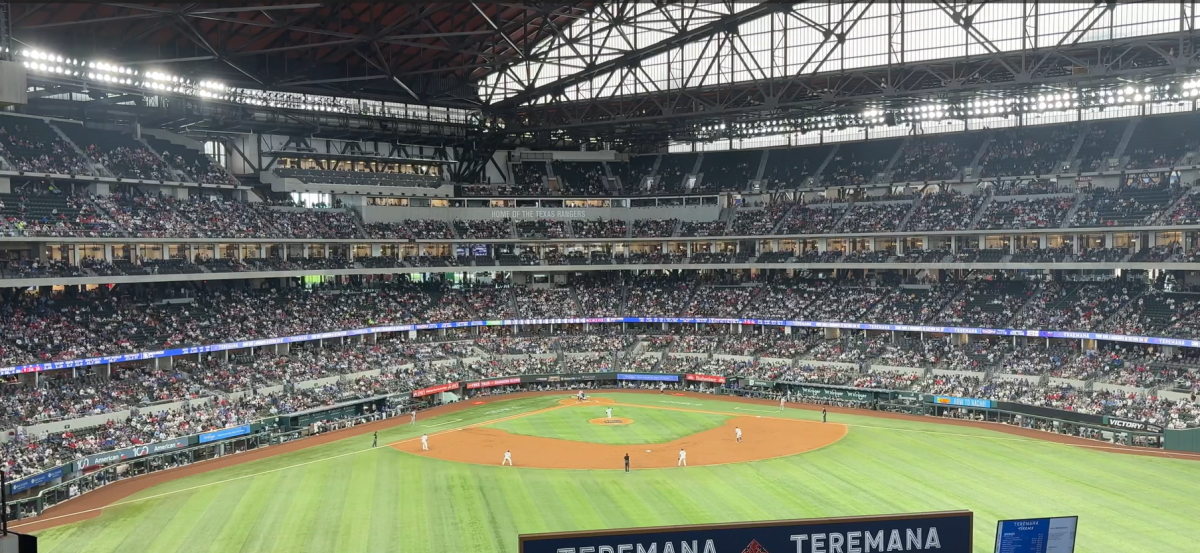



ARLINGTON, Texas–IndyCar is scheduled to come to Arlington March 13-15 with a brand-new high-speed street circuit that rips through the Entertainment District, weaving between Globe Life, AT&T and Choctaw stadiums.
It has been a long time since a major racing event has come to The American Dream City, but for one fleeting moment in the city’s history, Arlington was North Texas’ racing hub.
William T. Waggoner builds luxury facility
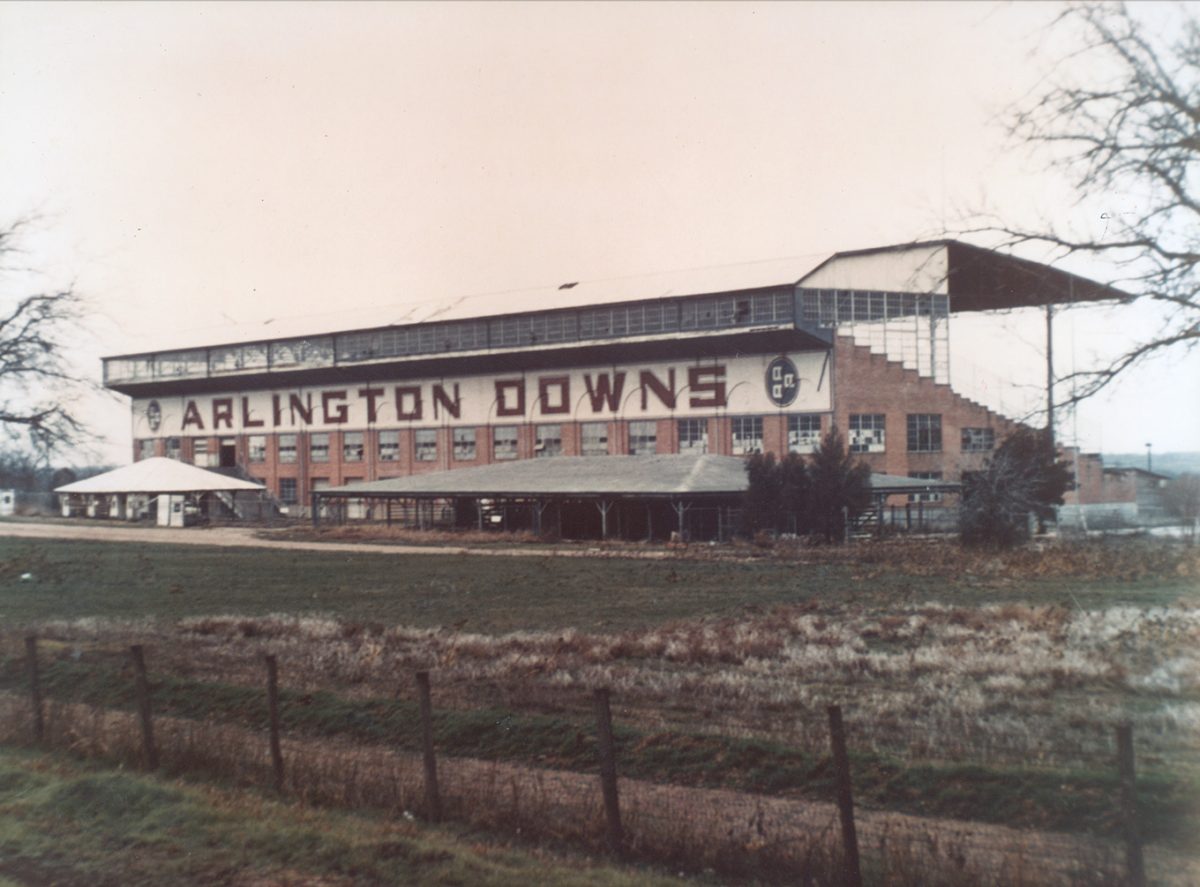
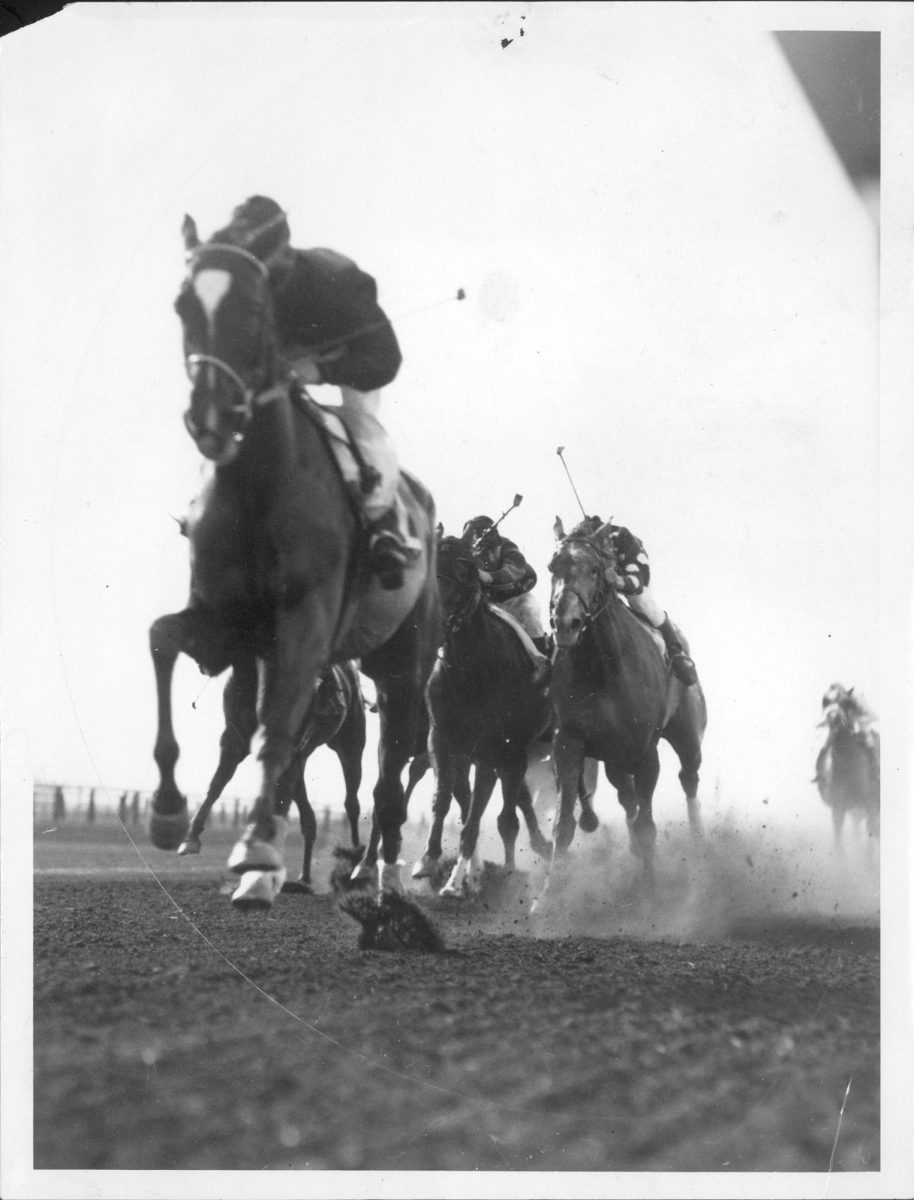
In the late 1920’s and early ‘30s, Arlington Downs was the premier horse racing destination in all of Texas. Rancher, oilman and thoroughbred enthusiast William T. Waggoner had the Downs built on his massive Three D Stock Farm, just off Division Street and directly east of the current-day stadiums, with construction starting in October 1927.
The more than $2 million luxury facility, roughly $37 million today, would serve as a breeding area and training grounds for his racehorses and entertainment for the public when it opened two years later.
The track, a one-and-one-quarter mile dirt oval, was complete with a 6,000-seat grandstand, 600 wood-paneled horse stalls, 151 viewing boxes and an opulent clubhouse. Visitors flocked to Arlington Downs—“hundreds of thousands,” according to a Fort Worth Steel and Machinery Company ad from the time. The Downs was popular, and so was Waggoner.
Waggoner played a crucial role in the legalization of parimutuel betting, a form of betting most associated with horse racing. Waggoner and his two sons spent thousands lobbying in support of the legalization in Austin.
By 1933, their efforts were realized.
Legalized betting
In the first season following parimutuel betting’s legalization in Texas, Arlington Downs saw nearly 7,000 attendees and raked in an average of roughly $10,000 in profit a day. Adjusted for inflation, that’s roughly $250,000. The Downs was more popular than ever.
Shortly after the racetrack’s betting boom, in December of 1934, Waggoner died from a stroke.
Waggoner’s death was the loss of one of the largest proponent’s of parimutuel betting. In 1937, the law that legalized the form of gambling was repealed, and Arlington Downs’ boom was no more.
The Downs was then sold to developers and used as county fairgrounds.
Cars roar where horses once ran
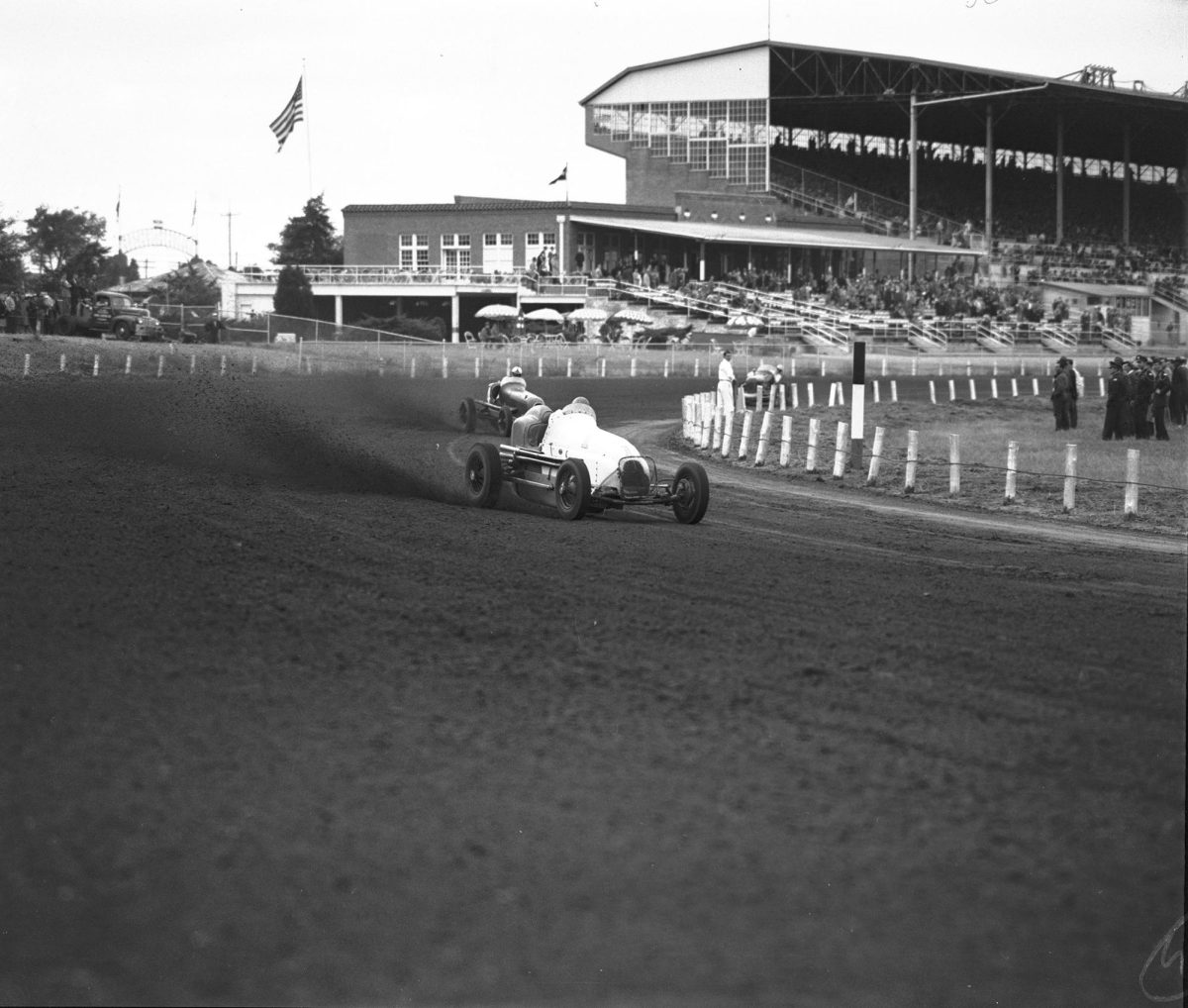
The earthquaking stampedes of horses would make way for the deafening, roaring engines of open-wheeled Champ cars, now known as Indy cars, in 1947 following the period of racing inactivity. Full-bodied stock cars would take over in 1951 and race for one season before the track’s eventual closing. Demolition started in 1953, and nearly everything was gone by 1957.
As Arlington expanded, the site where the Downs once stood was developed, covered by buildings, major roadways and part of Six Flags. A horse-etched fountain is all that remains at the site of the racetrack, located at the intersection of Commerce and Six Flags, now surrounded by flowering bushes and sitting at the edge of an industrial parking lot.
Two historical markers have sprouted since the track’s demolition, one paired with the fountain and the other down the road in front of Arlington Downs Tower. A road just north of the office building, Arlington Downs Road, shares the duty of carrying the racetrack’s name to this day, 67 years after the last grandstand fell.
In a world where Arlington Downs didn’t meet an early demise, maybe even thrived, it would have taken up the land right next to the stadiums. Had all the parts stayed in place for the Downs to survive, maybe the upcoming Java House Grand Prix of Arlington would be on an oval.
Arlington 150 is an occasional series to mark Arlington’s sesquicentennial and is produced as part of a collaboration between the University of Texas at Arlington Libraries Special Collections and UTA journalism students. This series was made possible in part by a generous Teaching in the Archives grant from UTA Libraries.