



ARLINGTON, Texas—Music and laughter filled a November night as families gathered to reminisce and connect with their lost loved ones.
The Wesley Foundation held its Día de los Muertos celebration on Nov. 1 to offer the Arlington community a chance to celebrate the holiday together.
“This is the Wesley Foundation’s second year hosting this annual traditional event,” Wesley Foundation director of community outreach Jesus Canales said in an email. “It started last year under a new leadership team as an idea to host a Día de los Muertos celebration with food and an altar. After its success, it grew into a larger community engagement event to share this beautiful tradition and offer space for grief and healing.”
Día de los Muertos is a holiday celebrated to remember and connect with loved ones who have died.
Indigenous and Catholic influences
“The traditions of Día de los Muertos come from Indigenous beliefs mixed with Catholic influence, creating a celebration that honors and remembers loved ones who have passed away,” Canales said. “Families build ofrendas (altars) decorated with photos, candles, flowers, food and items that represent their loved ones’ lives. The marigold flowers, candles and incense guide their spirits back to visit. It’s a way to celebrate life, remember those who came before us and show that death is not the end but a continuation of love and memory within the family and community.”
Through traditions like the ofrendas, those observing the holiday have a chance to honor the memory of their loved ones. Many families take that time to share stories about their loved ones and eat their favorite foods.
“[Día de los Muertos] is a really beautiful way of people getting together and just enjoying the life and spend time with the family,” member of Wesley foundation’s exec team, Itzel Flores, said. “We just started celebrating Día de los Muertos in my family after my grandpa passed away two years ago. We put on a little ofrenda, and we recite our favorite memories of our loved ones, and the family just gets together. We talked about my grandma and grandpa all the time. It’s just a way of remembering them and celebrating them for the way that they lived their life instead of making it a sad thing.”
Another important aspect of this holiday is feeling the presence of the people who have died.
“Something cool about the ofrenda is they put food there for the loved ones to eat,” Association of Mexican American Students member Maritza Perez said. “When their spirit comes back, they’re going to have a trail of the flowers. They walk down, and they use the flowers to guide them to the alter, that’s why they have food.”
Music and dance
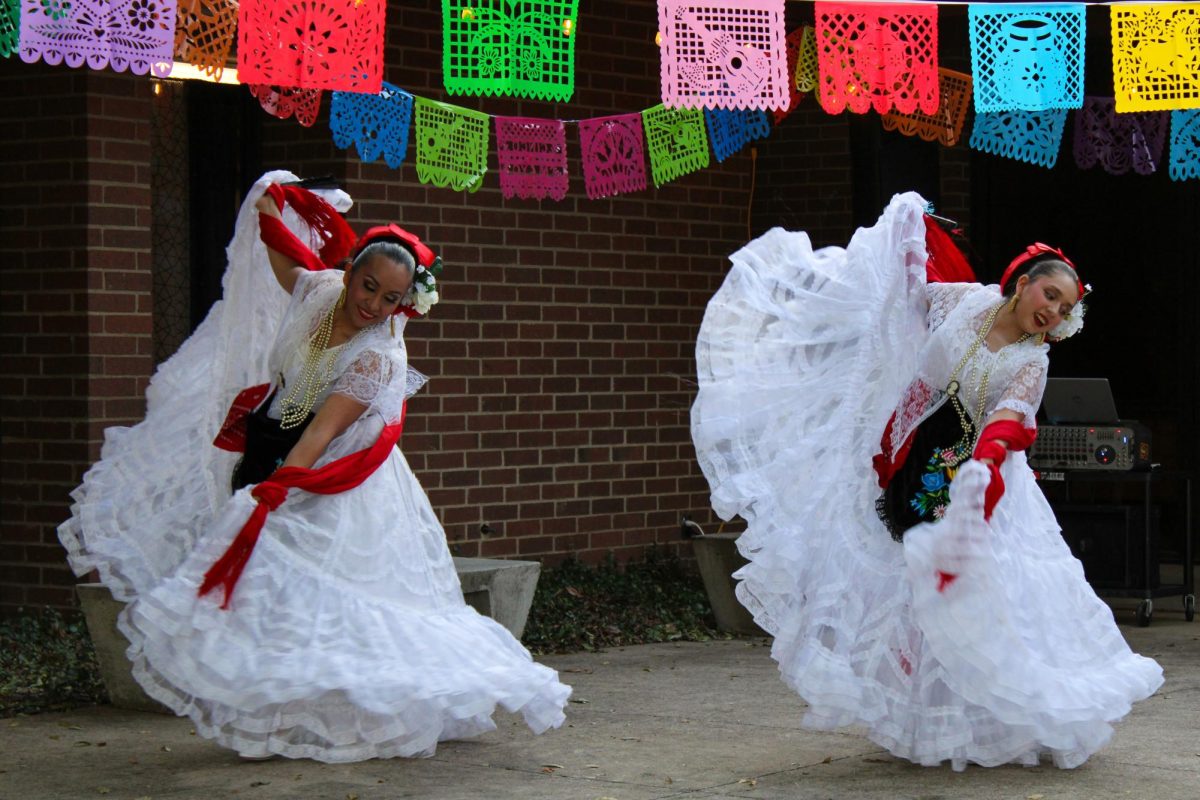
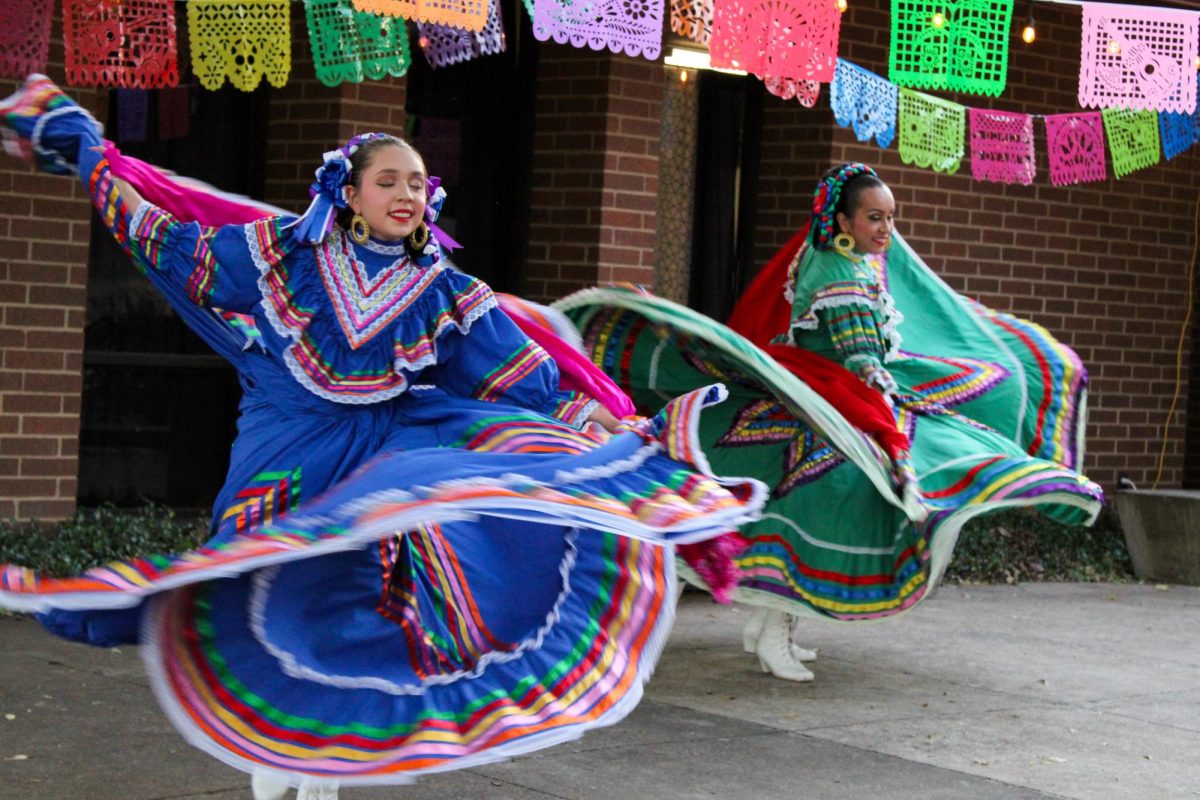
As part of the Wesley Foundation’s event, guests listened to performances by North Side High School’s mariachi group. A Catrina and Catrin costume contest was held as well as a piñata breaking. Ballet folklórico dance routines were also performed by Anastasia Flores Dance Company, Sam Houston High School Ballet Folklórico Team and Ballet Folklórico Azteca Team. Though these types of performances aren’t specifically tied to Día de los Muertos, they have deep connections to the culture behind the holiday.
“I got into [ballet folklórico] to connect more to my homeland and my roots,” Sam Houston High School Ballet Folklórico Team member Aaron Davila said. “When I found out that there was ballet folklórico at Sam Houston, I decided to join.”
Ballet Folklórico carries tradition of the culture not only through the dance but also through the costumes.
“[I’m wearing} a traditional vestido de Charro,” Davila said. “It dates back all the way to the 1800s, where Mexican horsemen wore wide brim hats with tall crowns. Ballet Folklórico takes from that outfit and integrates it into the dances for Jalisco.”
Many area groups helped contribute to bringing the Wesley Foundation event to the community.
“Our new director wanted us to continue the tradition, so we formed a committee to plan the event, inviting back student organizations and departments that participated before and reaching out to new ones from the business, engineering and communication departments,” Canales said. “My role involved contacting collaborators, vendors and donors, managing the budget, and coordinating volunteers. We divided tasks among groups, one for advertising and PR, one for building the altar, another for decorations and held three committee meetings (two in October and one in November) with light snacks and meals provided. Each organization gave updates on their contributions and progress toward the event.”
Though Día de los Muertos events revolve around the family, this event allowed the whole Arlington community to learn about and celebrate the traditions of the holiday.
“The importance of these activities is to keep the traditions alive and give guests a chance to experience what a celebration would be like in Mexico, connecting everyone to the meaning and beauty behind Día de los Muertos,” Canales said.
To hear an audio story about mariachi music, please click here.