










Sunlight poured through the windows of the small apartment, catching the dust motes that danced above piles of half-packed boxes and abandoned canvases. It was the kind of space that told the age-old story of late nights, last-minute essays, forgotten plants; by midafternoon, it would be rewritten entirely.
Hanna worked the steam cleaner across the kitchen tile with quiet satisfaction, pausing only to admire the streak-free shine she’d coaxed from a faucet.
“Oh, this thing, we love it,” she said, smiling as if sharing a secret. “We bought three of them we loved it so much.”
Nearby, Alonso pushed a vacuum in slow, deliberate lines, jeans stiff in the summer heat.
“I’m heat broken, dude,” he said with a laugh. “I can take any heat all day.”
There was no boss watching over them, no schedule imposed from above, just the two of them, moving with practiced precision, trading glances and nods as they anticipated each other’s next step. Midway through the job, Hanna stopped to ask what sounded good for lunch, weighing the options before deciding on Vietnamese. Then, reenergized, she wiped down the counters with a renewed sense of purpose.
The life they’ve built
By the time they finished, the apartment looked untouched by human hands. The room felt lighter somehow, as if their hard work had swept away more than dust. But the real work, the meaningful work, wasn’t just the cleaning.
It was the life they’d built in the process, one scrubbed floor and polished window at a time, a business born from the simple joy of doing something they love.
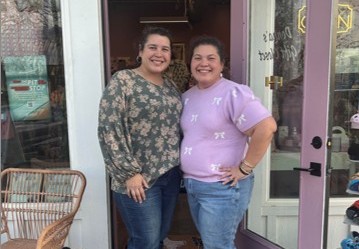
Once, the American dream was measured in milestones: a deed to a house, a pension after decades of loyalty, a name etched on an office door. For Hanna and Alonso Varela, it looks more like mornings spent walking dogs, polishing windows and checking in on aging parents. What began as simply a way to fund their wedding has grown into Varela Visits, a small business stitched together by trust, word of mouth and a relentless care for others.
There’s no corporate hierarchy here, no promotions to chase, only the quiet pride of building something that belongs entirely to them. In crafting a life around work they love, the Varelas show that the dream was never about wealth. Their dream is freedom, purpose and the people we choose to lift up along the way.
From their home base in North Texas, Hanna and Alonso have turned Varela Visits into a deeply personal concierge service, one that blurs the lines between business and community. On any given day, their work might mean scrubbing a kitchen until it gleams, organizing an estate for a family in transition, or sitting beside an elderly client during a doctor’s appointment to relay updates to loved ones. They arrange pet care, plan meals, coordinate schedules and, when needed, simply offer companionship, filling the quiet gaps that modern life often leaves behind. It’s work that rarely makes headlines, but it’s work that matters deeply to those in need. And for the Varelas, that’s the point: building a business not from boardrooms and spreadsheets, but from trust, empathy and the kind of care that can’t be automated.
Began with small steps
The business wasn’t born from a strategy session or a carefully plotted business plan. It started, as many great stories do, with small steps toward a grand future. A few babysitting gigs here, a housekeeping job there. Small, practical ways to make extra money for a wedding or a home renovation.
Now the demand has grown, as has their reputation. One family turned into 10, then 15, then 20. Hanna realized she was earning more juggling part-time clients than she ever could working full-time for a single employer. Eventually, the work reached a tipping point: What began as a side hustle had become a livelihood. Quitting her day job wasn’t a gamble; it was a recognition of the network they’d built–one rooted not just in services rendered, but in trust, relationships and a shared sense of care.
For Hanna, the leap into full-time self-employment was the realization that the old model simply didn’t make sense anymore.
“I was working multiple jobs and thought that was just my personality,” Hanna said. “But then someone offered me a full-time salary equal to what I was making with all my part-time work combined. When I added it up, I realized there was no offer they could make that was worth giving up what I’d built—the flexibility, the relationships, even the tips and holiday bonuses.”
This realization turned the side hustles into a calling and pushed her to invest fully in what they were building.
The deeper they leaned in, the more they understood the human side of their work. What began as a transactional service quickly became something else entirely—a network of trust.
“It was shocking at first,” Hanna said. “People were just trusting me. They’d read our reviews and think that was enough. Now it’s different. Our clients are friends. Our wedding photos are on their fridges. They invite us to their baby showers. It’s not just about sending an invoice. It’s about showing up because you care.”
Staying grounded amid expansion
That sense of purpose and the bonds that have grown from it are what keep them grounded even as the business expands.
The Varela’s story is no longer an exception to the rule, but rather part of a wider reimagining of what work means in America. Since the pandemic, the idea of a “real job” has begun to unravel. Across the U.S., more people are stepping out of traditional employment or combining odd jobs or “gigs” with salaried work, and that shift is quietly transforming how Americans define success and a hard day’s work. Today, at least 42 million Americans are engaged in some form of “gig” or non-standard work, according to one estimate. In broader terms, surveys suggest that between 25% and 43% of the workforce has participated in gig work at some point. Meanwhile, the nonemployer (“sole proprietor”) sector, including many “gig” based work, generated $152.6 billion in receipts in 2023 alone, with janitorial services and courier work among the top contributors.
More than statistics, these trends reflect a deeper shift. The gig economy is growing three times faster than traditional employment, and Gen Z appears to be leading the charge, in part because many no longer trust the old system of climbing a corporate ladder. A 2022 McKinsey report found that 36% of employed Americans, or roughly 58 million people, identified as independent or “gig” workers.
For Hanna and Alonso, the statistics aren’t just numbers on a page, they’re reflected in every call, every client and every referral that comes their way. Their story embodies the larger trend reshaping the labor market: a growing refusal to measure worth by promotions or pensions, and a decision to build a livelihood on their own terms.
Like millions of gig workers across the country, the Varelas have discovered that success doesn’t have to mean stability in the traditional sense. Instead, to them it means autonomy. The power to choose clients, set hours and shape their work around their lives rather than the other way around. In a world where flexibility is often synonymous with precarity, they’ve shown that it can also be a foundation for purpose and pride.
The redefinition of a “hard day’s work” isn’t happening in boardrooms or behind corner-office doors. It’s unfolding in places like the Varelas’ world, in the scrubbed kitchens, organized estates and carefully tended relationships that make up the backbone of their business. It’s there, in the ordinary acts of care and effort, that the American dream is being rewritten for a new generation.
Less about chasing status and more about creating meaning, it’s a dream that looks different for everyone. For Hanna and Alonso, it looks a lot like this: two people doing work they love, on their own terms, and building a life that’s entirely, unmistakably theirs.