













ARLINGTON, Texas—At 10 a.m. March 3, it was a temperate 73 degrees in the city, and the city hall’s normal roar was dulled to a whisper as people worked and elsewhere in Arlington students counted down the hours left until spring break.
It was the quiet after the storm.
Just a week earlier, the Arlington City Council approved an anti-discrimination ordinance that did not include LGBTQ+ protections. The District 2 representative and deputy mayor, Raul Gonzalez, voted against reinstatement of the protections.
The current political climate, especially in red states like Texas, has LGBTQ+ community members and allies concerned for their rights and safety. In Kansas, transgender residents had their licenses invalidated without warning, Tennessee has heavily restricted drag performances, Mississippi banned transgender children from participating in sports and Texas has outlawed transgender people from being able to use the restroom that aligns with their gender identity. These are just some of the laws affecting queer people at the state level.
In November 2025, a petition was considered by the Supreme Court to reverse the precedent set by Obergefell v. Hodges, the case that legalized same-sex marriage in 2015. The court ultimately declined to reconsider the decision, but the mere thought of losing the right to marriage shocked many queer people.
Rejection of the community
With fear already rising in the LGBTQ+ community, the loss of Arlington’s protections caused outrage. Many residents interpreted the move as a direct rejection of the community. But Gonzalez said that interpretation is inaccurate and noted the situation was more complicated than it appeared.
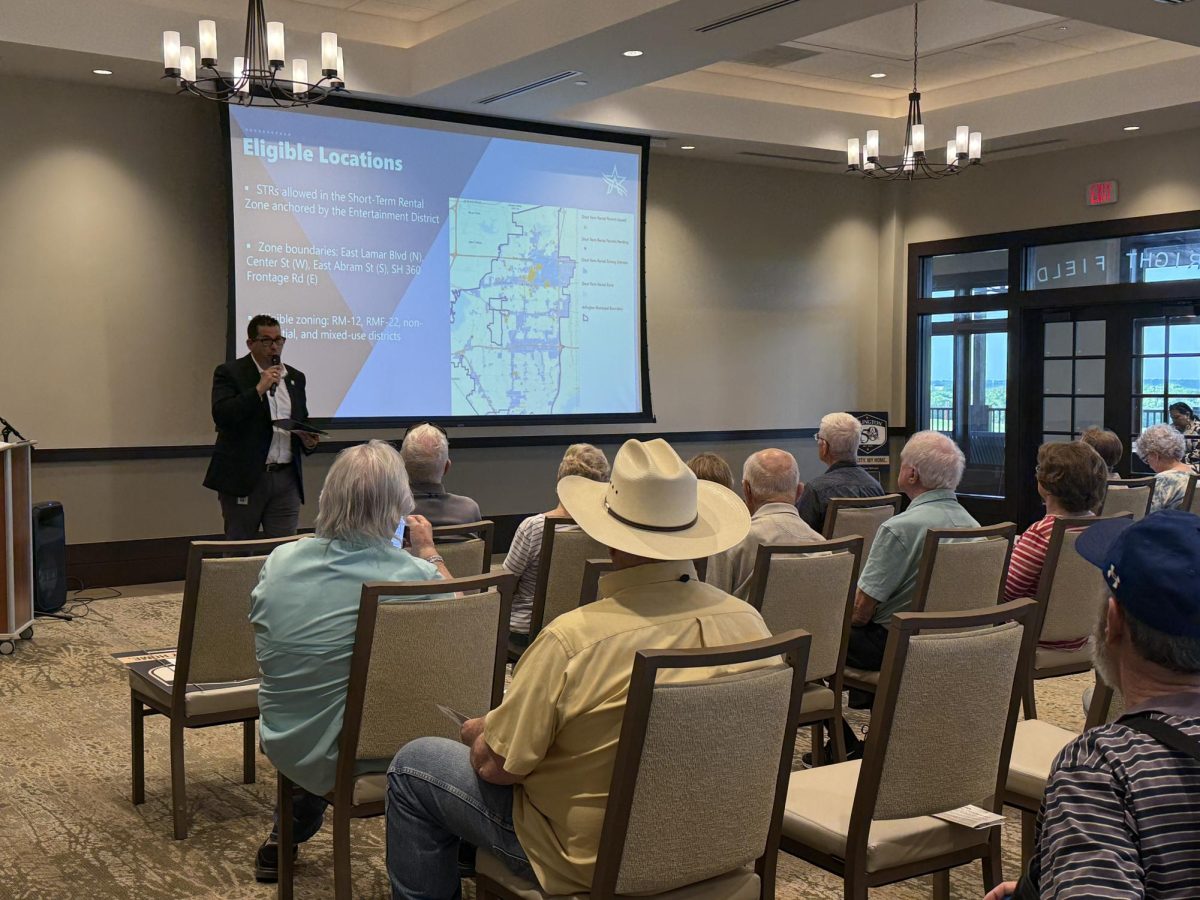
Gonzalez has lived in the city since arriving as a student at the University of Texas at Arlington in August of 1980. He is a Pi Kappa Phi – Delta Psi alumnus and remains active in the community through groups like the Salvation Army and Meals on Wheels.
Gonzalez said he holds no ill will toward the LGBTQ+ community and added that he believes that everyone deserves protection under the law.
“There was misinformation about it, what we were doing, and that it went against transgender and gay. That is so wrong,” Gonzalez said. “That’s the hardest part for me. Everybody should be protected. Everybody should be covered.”
Gonzalez said the decision was heavily influenced by pressure from the federal government. The city of Arlington was told it could lose around $65 million in federal funding if it did not comply with the request to remove the original, more inclusive ordinance.
For city leaders, the threat forced a difficult ultimatum.
“We would lose $65 million, which we need,” Gonzalez said. “And people say, ‘So that’s how much we’re worth?’ But you’re not on the city council. You have no idea.”
Housing funds in peril
The funding was intended for housing programs, something Gonzalez said would have affected thousands of Arlington residents if it had been cut.
“It was for housing, so that’s where it went. So that’s about 3,000-4,000 families that it would affect,” Gonzalez said.
Even so, the backlash from residents was immediate. Some community members approached city council members after the vote and questioned whether financial concerns should outweigh the safety and protections of LGBTQ+ residents.
Gonzalez said situations like this are among the hardest parts of serving in local government.
“That’s been the hardest part, being on city council,” he said, explaining that many residents want someone to blame for difficult decisions even when council members feel their options are limited.
Despite the controversy, Gonzalez said his focus remains on representing all Arlington residents, regardless of political affiliation or identity.
“I’m not a developer, I’m not a business. I’m just a regular person like everybody else paying taxes,” Gonzalez said. “I represent everybody. I don’t care if you’re Democrat or Republican or independent. You want to feel safe. You want nice neighborhoods. You want your trash picked up and your streetlights working.”
Impact on daily lives
Before joining the city council in 2020, Gonzalez served on the Mansfield school board for a decade, including two years as board president. He said his experience there helped shape how he views public service and the role of local leadership.
During that time, Gonzalez said he learned how decisions made by local officials can have an immediate impact on people’s everyday lives.
“We have more impact on the everyday life of people—school boards and city councils—than D.C. or Austin,” he said.
For Gonzalez, the goal of serving on city council is ultimately about improving the city for future residents, especially students who attend UTA and may want to stay in Arlington after graduating. One of the issues he says he focuses on most is housing affordability.
He said his hope is that young professionals will eventually be able to afford homes in the city rather than being priced out of the community where they studied and began their careers.
While the debate over LGBTQ+ protections remains unresolved for many residents, Gonzalez said he hopes the conversation moving forward will focus less on division and more on understanding the constraints local leaders face.
“We’re going to disagree,” he said, reflecting on the broader political climate. “But we should be able to disagree better.”