













ARLINGTON, Texas—A mix of frustration, urgency and civic engagement brought protesters and local leaders together Saturday for a No Kings protest as debates over political power, civil liberties and local governance intensified.
Students, activists and political candidates described a climate in which many feel compelled to speak out, whether through demonstrations, voting or public service. The protests and public comments reflect broader concerns about political power, civil liberties and civic participation at both the local and national levels. For some, these actions are about immediate policy disagreements, while for others, they represent deeper anxieties about the direction of the country and the strength of democratic institutions.
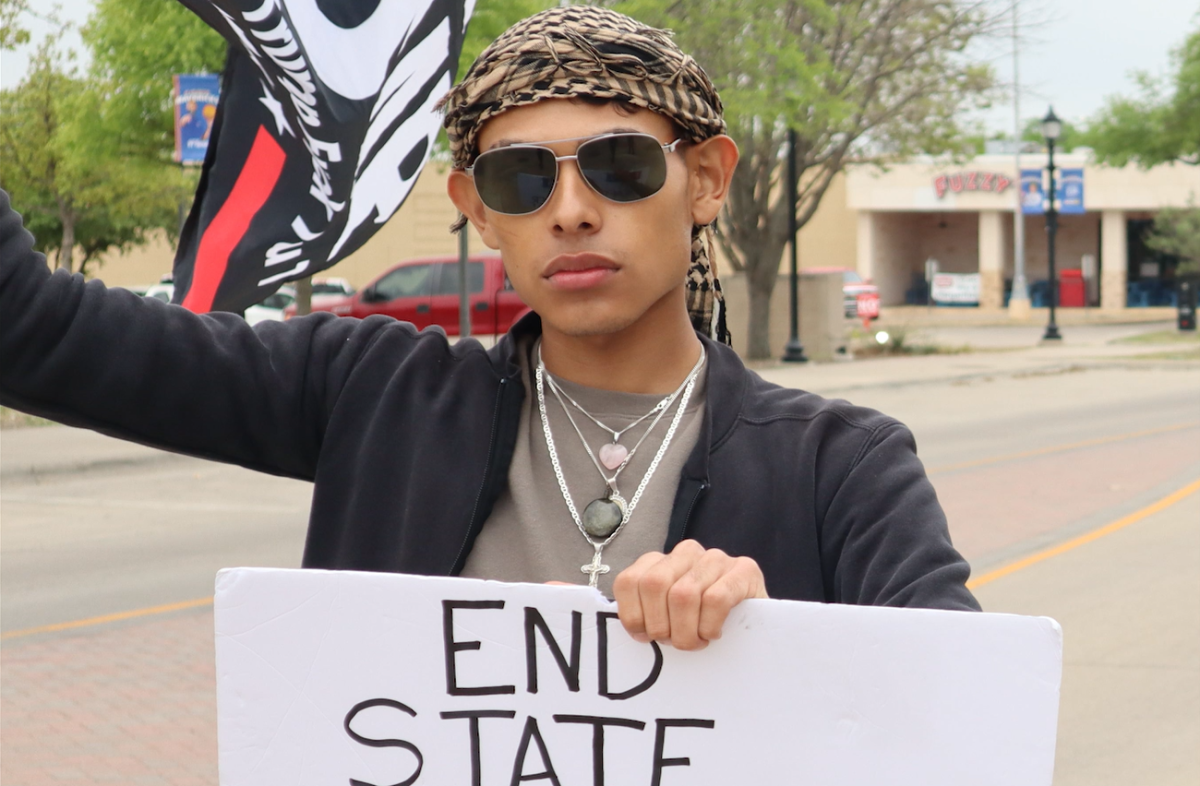
Eric Argueta, a high school student who recently participated in a walkout, said young people are increasingly alarmed by what they see as threats to their freedoms. He described a surge in student-led activism, with many teenagers organizing and participating in demonstrations despite potential consequences from school or state authorities.
“As a student, a bunch of high schoolers were walking out. Our governor threatened districts, saying if they aren’t handling things correctly, the state will step in. That takes away from freedom of expression,” Argueta said.
‘It’s only going to get worse’
Argueta described a sense of urgency among his peers, saying many believe the country is no longer in the early stages of political tension. He said students are paying closer attention to political developments than in previous years, often discussing issues in classrooms, online and at community gatherings. Argueta emphasized that younger generations are prepared to continue pushing for change.
“We’re not in the early stages anymore,” he said. “If we don’t stand up and do something immediately, it’s only going to get worse.”
While students voiced concern through protest, local political figures emphasized participation through elections as a key response to rising tensions. Jason E. Shelton, a candidate for Arlington City Council representing District 8, said the current political climate has energized many Americans. He noted that increased political engagement is visible not only in protests but also in voter interest and community discussions.
“A lot of Americans are fired up about the circumstances in our country right now. People feel like their freedoms are not protected,” Shelton said.
Shelton, a sociology professor at the University of Texas at Arlington, encouraged residents to channel that energy into voting, particularly in local elections, where policy decisions directly affect daily life.
‘Local elections matter’
“We’ve got to speak up and speak out, but we also need to go to the polls and exercise the right to vote,” he said. “Local elections matter just as much as national ones.”
Shelton pointed to transportation, housing and homelessness as pressing concerns for Arlington, describing them as “big city problems” requiring long-term solutions. He said the city’s growth has brought increased challenges that require strategic planning and cooperation among local leaders.
“We have problems with transportation, housing and homelessness. These are big city problems, and you cannot solve them if you think like a suburb,” he said.
He said his experience in city leadership positions makes him prepared to address those challenges. Shelton chaired the city’s Unity Council for five years, and he is on the boards of the Arlington Museum of Art and Levitt Pavilion. Shelton said that while challenges exist, the future remains promising if people stay involved. He emphasized the importance of preparation and civic responsibility, particularly for younger generations who will shape future policy decisions.
“I believe the future of our country is bright,” Shelton said. “But you’ve got to be ready—get your education right, get your life in order and participate.”
Anger over immigration enforcement
Other protesters expressed anger over national political actions, particularly related to immigration enforcement and foreign policy. Some participants said their concerns extend beyond local governance, pointing to federal decisions they believe have far-reaching consequences on civil rights and international relations.
Brenton Schapin criticized what he described as aggressive tactics toward immigrants and limitations on constitutional rights. He said these actions raise serious concerns about due process and the protection of individual freedoms.
“This business of rounding up people, accusing them without proof and detaining them—that’s a problem,” Schapin said. “We have the right to free speech and to assemble.”
Schapin also raised concerns about broader government actions, arguing that stronger accountability measures are needed. He said many Americans are questioning how to prevent similar situations in the future and ensure that government power is exercised responsibly.
“How do we fix our country?” Schapin said. “We need some way to stop this from happening again.”