





















ARLINGTON, Texas – The Arlington City Council is scheduled to take a final vote Tuesday on a revised anti-discrimination ordinance that removes specific protections for LGBTQ+ individuals, sparking concern about a potential rise in sexuality- and gender identity-based discrimination, especially in housing.
For many students and young renters, the policy debate feels personal, tied directly to where they sleep, study and build community.
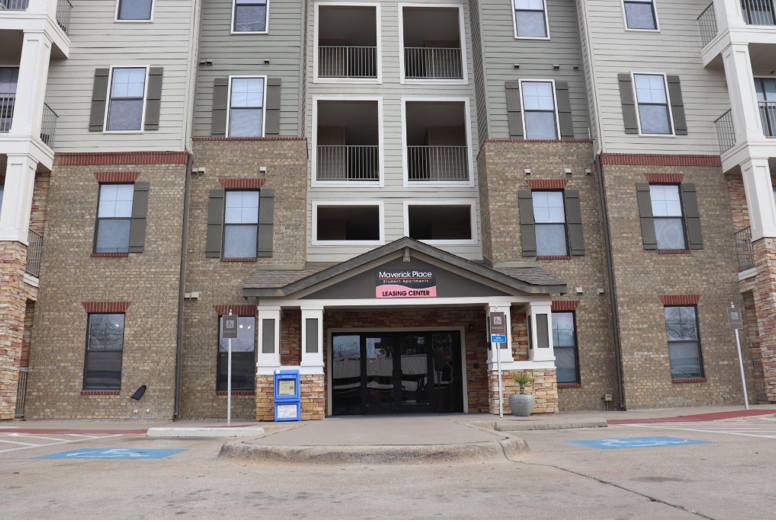
Just a short walk from the University of Texas at Arlington campus stands Maverick Place Student Apartments. Although it is not affiliated with the university, a majority of its residents are UTA undergraduates who chose the complex for its proximity to classes, student life and affordability.
Because UTA has a substantial LGBTQ+ student body and is among the most diverse campuses in the nation, Maverick Place is a natural option for LGBTQ+-identifying residents who rely on nearby housing that feels safe and welcoming.
For those residents, the conversation about legal protections is not abstract. Housing is often where discrimination has the most immediate impact, and the possibility of losing local protections raises concerns about what recourse tenants would have if problems arise. Many students living off campus are renting for the first time, making clear policies and supportive management especially important.
The staff at Maverick Place is as diverse as the university, and it preaches inclusion for everyone. Staff members said they prioritize making the apartments feel like a real community and host multiple events a month for the residents.
One recent event was a watch party for the Super Bowl and the controversial Bad Bunny halftime show. Staff even decorated the lobby for Valentine’s Day, reflecting effort the staff puts in to create a space that feels welcoming beyond just a place to sleep.
Eduardo Luzardo is a leasing agent for Maverick Place apartments as well as a UTA sophomore. He said the loss of the anti-discrimination ordinance wouldn’t impact operations.
“We do still have to follow fair housing protections, which is a federal law,” Luzardo said.
His response reflects a broader understanding among staff that, regardless of local policy changes, federal regulations still set a baseline for tenant protections.
Despite the city’s decision to remove LGBTQ+ protections, residents who believe they have suffered discrimination still have recourse. Under the revised ordinance, residents could report discrimination to state and federal agencies instead of relying on local ones, a process that can be more complex but still offers legal pathways for complaints and enforcement. For students balancing school, work and housing, that shift could make navigating discrimination claims more difficult, but not impossible.
Other employees of Maverick Place were surprised to hear about the loss of protections but stood steadfast in their belief that the apartment would not change its stance and embraced acceptance. Their reaction mirrors that of many students who say their day-to-day environment is shaped more by people and policies at the property level than by city politics.
“I believe us and other apartments will continue to be inclusive despite Arlington’s decision to remove the LGBTQ+ protection law,” said Maicee Bailey, another leasing agent with Maverick Place.
“It’s not going to affect us; we’re still going to lease to everybody. We don’t care, and the whole crew is gay, so,” Luzardo said.